

We Rebuilt Our Own Website. Here Is What We Changed and Why.
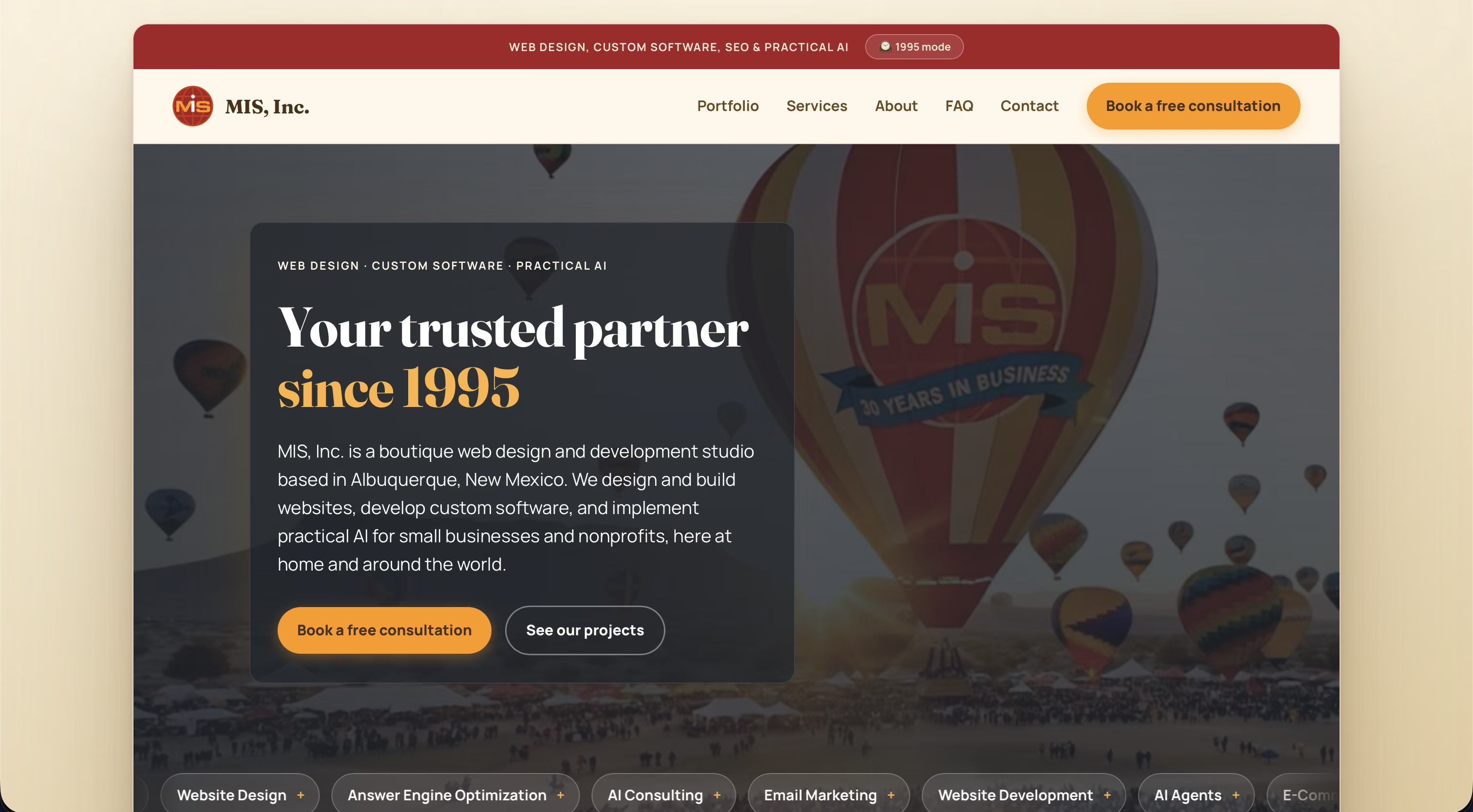
After 31 years in business and about 18 months of putting it off, we rebuilt misinc.com from scratch with a new framework, published prices, privacy-first analytics, and no advertising tracking.
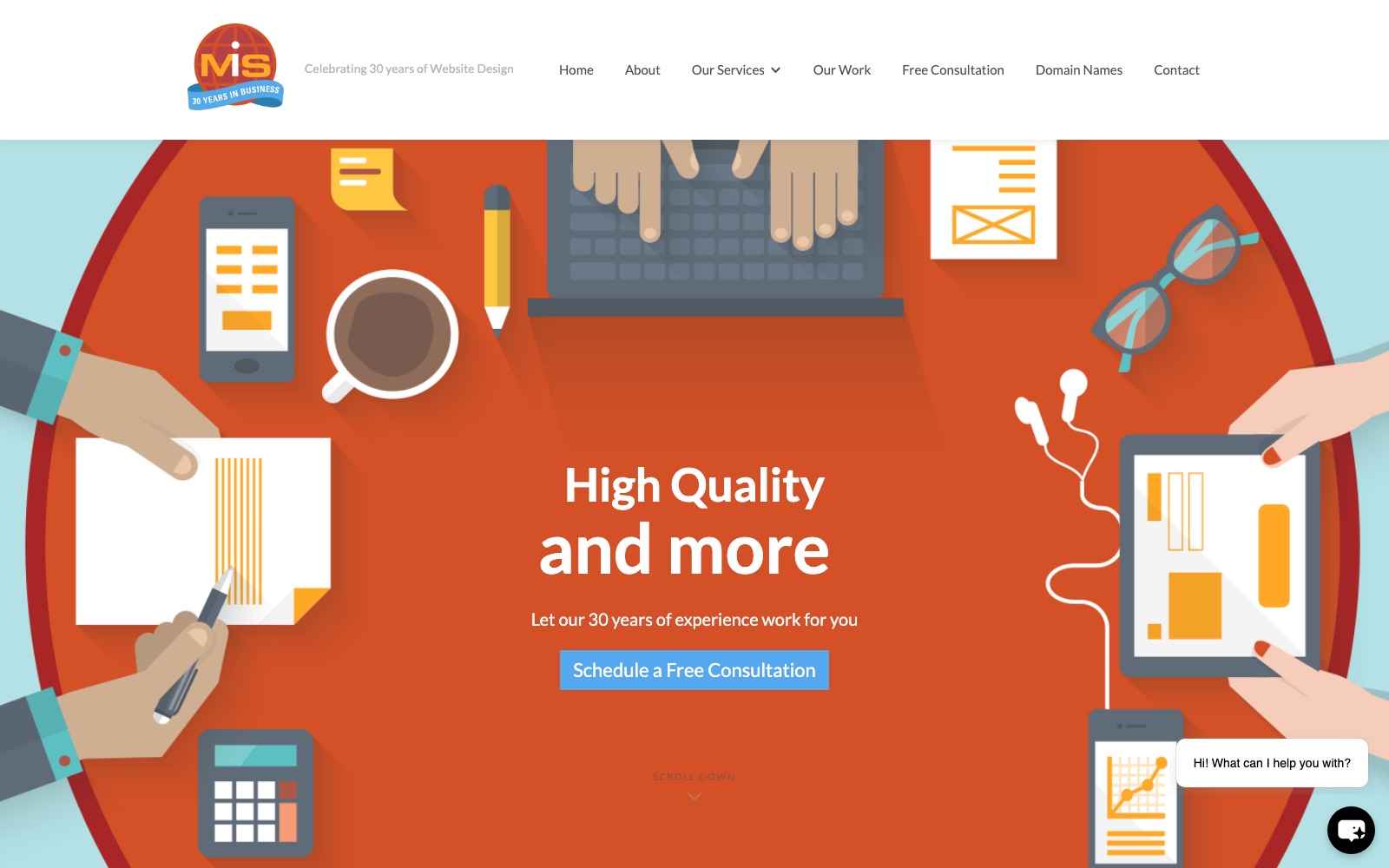
We have built more than 500 websites since 1995. Our own had not been rebuilt since 2018, and for the last eighteen months of that we knew it needed doing and did not do it.
That is a common enough position that it is worth writing up honestly, along with what we eventually chose and the reasoning behind each decision, including a couple that look inconsistent until you hear the reason.
Why we stalled
Not for a lack of ability, which is the awkward part.
We had the thing every agency has: paying client work is always more urgent than your own website.
So it drifted. The contact page listed an office we had left. The AI work that had grown into a real part of the business was not mentioned at all.
None of that was breaking. It was just steadily less true, which is the failure mode businesses ignore longest. Nothing is ever urgent enough to force the issue.
There is a certain symmetry here. When we launched the 2018 site, we opened by admitting we had last redesigned in 2011 and had spent the years since building sites for everyone but ourselves. Seven years on, we were writing the same sentence with different numbers.
The decision that took the longest: what to build it on
We are a Certified Webflow Partner. We build most of our client sites on Webflow. We then built our own site in Astro, which deserves an explanation rather than a shrug, not least because our own 2018 post announcing the last rebuild said we strongly recommend Webflow over the alternatives.
We still do, for the people that advice was written for. The explanation is who those people are.
Webflow’s real advantage is not that it produces better websites. It is that it lets someone who is not a developer change their own site without fear. For many of our clients that is decisive. The alternative is a site that goes stale because every edit requires an email to us, which is a failure mode we spend a great deal of time preventing.
We do not need that. We are the developers. So for us the calculation is different: a static site with faster page loads, and full control of the markup.
The principle underneath is that the best platform depends on who is going to maintain the site, not on which platform wins an argument. Recommending Webflow to a restaurant owner and using Astro ourselves is not a contradiction. It would be a contradiction to recommend Webflow to a team of developers, or Astro to someone who has never opened a terminal.
If your situation is genuinely closer to ours than to a typical small business, we will say so and build you something else. We have a page comparing the platforms we work with, including the ones we no longer recommend.
Reducing the risk to 31 years of search history
This was the part that carried real risk.
A site that has been live since the 1990s accumulates search rankings that are genuinely hard to rebuild. Before touching anything, we exported our Search Console data and ranked every URL by impressions.
That exercise was clarifying. A handful of pages carried the overwhelming majority of our search visibility. One guide alone accounted for more impressions than most of the site combined. Meanwhile, 27 old blog posts turned out to be 40-to-90-word link shares pointing at other people’s articles, the kind of thing everyone published in 2015 and nobody should keep.
So the rules were simple:
- Every URL that earns traffic keeps its exact address. Not a similar one. The same one.
- 301 redirects only where we consolidated deliberately. Five near-identical posts about web design pricing became one, with permanent redirects from the four we retired.
- Retired pages get explicit redirects, one by one, rather than a catch-all rule that would have swallowed the posts worth keeping.
Careless URL changes can discard search history that took years to earn. Preserving URLs and mapping redirects reduces that risk, but it does not guarantee that visibility will remain unchanged. If you are planning a rebuild, export your Search Console data first and identify the pages that need the most careful treatment.
We published our prices
Our old site did what most agency sites do, which is decline to mention money until you are on a call.
The new one lists what a project actually starts at.
Two reasons. The obvious one is that it respects people’s time. Someone whose budget is a quarter of our starting figure finds that out in thirty seconds instead of after a scheduled call, and both of us avoid spending half an hour on a conversation that was never going to fit.
The less obvious one is that people now ask both search engines and AI assistants questions such as “how much does a website cost in Albuquerque?” Publishing our own figure gives those systems an accurate source they can use, although it does not guarantee how or whether they will present it.
There is a full pricing guide covering what moves the number up and down.
We wrote it for people first
The person we wrote for is whoever is reading this and trying to decide whether to hire us. That came first. Search visibility and AI-assisted discovery matter, but neither improves when the page becomes less useful to the person making the decision.
In practice, the work overlaps. Important information needs to be available as text, the pages need to be crawlable, and facts should be clear and consistent. Appropriate structured data can help describe visible content, but it does not force a search engine or assistant to cite the page.
For this site, that meant accurate structured data, real questions answered where they belong, and specific facts instead of generic adjectives. “We are a boutique agency delivering world-class solutions” says very little. “Projects start at $5,000” gives a prospective client a useful piece of information.
Our SEO service covers traditional and local search work. Our separate AEO service focuses on crawler access, clear business facts, consistency, and monitoring in answer-driven search experiences without promising citations.
Privacy-first analytics, no advertising tracking
The new site has no Google Analytics, no advertising pixels, and no analytics cookies. We use Fathom Analytics for aggregate page traffic and three conversions: successfully delivered contact forms, successfully delivered project forms, and completed consultation bookings. Those events contain fixed labels, never form or booking details. The fonts and the map on the contact page are served from our own site rather than Google’s.
We still do not collect data merely because everyone does. We chose the few questions that can lead to a real decision, such as which pages and referral sources lead to inquiries and bookings. Fathom does not build behavioral profiles or track people across websites.
The Cal.com booking tool loads only on pages with a booking calendar, including the free consultation page and private client meeting pages, and may set its own cookies. Cloudflare may also set a security cookie. Our privacy policy describes those services and what the site actually does.
This gives us useful measurement without adding advertising technology, cross-site tracking, or visitor profiles. If you are running ads, your situation is different, but it is still worth asking what you would actually do differently if you knew.
What we would tell you to do
If you are sitting where we were eighteen months ago:
A rebuild is not always the answer. Many sites need repairs, not replacement, and repairs cost far less. We say this knowing it is the smaller invoice for us.
Export your Search Console data before anyone touches anything. It is the only reliable record of what your site is worth, and it takes ten minutes.
Decide who is going to maintain the site before choosing what to build it on. That single question settles most of the platform argument.
Publish the things you are tempted to withhold. Prices, straight answers, the recommendation that loses you the sale. It reads as confidence because it is.
Ship it before it is perfect. Ours was ready long before it launched. The reason it took eighteen months was not the work.
If you want a second opinion on whether your own site needs replacing or just fixing, book a free consultation. We will tell you honestly, including when the answer is that you should not spend the money.
Want a second opinion?
We have been building websites in Albuquerque since 1995. Book a free consultation and we will tell you honestly what would help, including when the answer is that you do not need us.
Common questions
Why did MIS, Inc. build its own website in Astro instead of Webflow?
Because we are the client in this case, and we do not need what Webflow is best at. Webflow’s visual editor is valuable to clients who want to publish without relying on a developer. We are developers, so Astro’s static output and direct control over the code fit the way we maintain our own site. The right framework or platform depends on who will maintain the site and what it needs to do.
How do you rebuild a website without losing search rankings?
Start by identifying which URLs already earn impressions, visits, and links. Preserve those addresses when possible, map every intentional change to a permanent redirect, carry important page information across, and monitor Search Console after launch. These steps reduce migration risk, but no process can guarantee that rankings will remain unchanged.
Should a small business publish its prices on its website?
In many cases, yes. Publishing starting prices helps people decide whether a conversation makes sense and saves time on both sides. It also gives search and answer-driven systems an accurate public source instead of leaving the cost unclear. Some projects still need individual estimates, but that does not prevent a business from explaining its normal starting point.
More from the blog
How to Choose an SEO Company in Albuquerque
What competent SEO work looks like, what to ask before hiring anyone, and how local search in Albuquerque differs from ordinary organic search.
ReadWhat SEO Services Actually Include
A practical breakdown of technical SEO, content, local search, authority, and reporting, including which parts a small business can reasonably handle itself.
ReadWhat Realtors Actually Need From a Website
A practical guide to IDX listings, lead capture, neighborhood content, and the decisions that make an independent real estate website useful.
ReadLet’s talk about your project.
No pressure. Clear recommendations. 31 years of seeing what works.